Lundy boasts immaculate granite cliffs up to 120m in height providing a wealth of sea cliff adventures amongst stunning scenery and wildlife and over 1000 routes are documented. To avoid disturbance to nesting seabirds, access restrictions that cover around 70% of the cliffs are typically put in place between 31 March and 14 August, although these may be extended or varied depending on the breeding season. A small number of crags and buttresses are closed until 15 September to avoid disturbance to breeding Fulmar. The 2021 information, published by The Landmark Trust, can be found here. Climbers are advised to check the noticeboard in the Marisco Tavern and contact the Warden in advanmce or on arrival.
The majority of Lundy's cliffs are on the western side of the island, with the most popular cliffs between Old Light and Three-quarter Wall. When high winds or big seas make climbing on the west coast impossible, there are good climbs on Halfway Buttress on the east, around the obvious Logan Stone.
The definitive guide, by Paul Harrison, published in 2008 is available from The Climbers Club website, where there are also free downloads of a 2017 update and a 2009 supplement covering the Knight Templar Rocks.
According to UKClimbing, the most popular climbs are:
- The Devil's Slide (HS 4a) - the classic Lundy slab climb, not usually affected by the seabird restrictions; 117m, 5 pitches, although pitches 1+2 and 4+5 may be combined.
- Albion (VS 4c) - a popular climb in the Devil's Slide area - the big corner on the left-hand side of the Devil's Slide; 107m, 4 pitches.
- Satan's Slip (E1 5a) - also in the Devil's Slide area follows the black streak up the left hand side of the Devil's Slide until it reaches the corner of Albion higher up; 3 pitches.
- Diamond Solitaire (VS 4c) - in the Flying Buttress area, near Battery Point, 2 pitches.
- Horseman's Route (HS 4b) - in the same area as Diamond Solitaire; 2 pitches.
- The Indy 500 (E1 5b) - in the Landing Craft Bay area, south of Battery Point; 35m, 1 pitch.
- Shamrock (VS 4c) - also in the Landing Craft Bay area; 3 pitches.
- Double Diamond (HVS 5b) - in the Flying Buttress area; 35m, 1 pitch.
- Formula One (HVS 5a) - adjacent to Indy 500 in the Landing Craft Bay area, formerly one of Lundy's classic HVSs and a route of great variety; 40m, 1 pitch. The top flake had fallen away by June 2012, with loose rock forcing an escape onto the Indy 500 route (the so-called 'Formula 500' variant).
Over 350 species of lichens have been recorded on Lundy, which is about one-fifth of the total lichen flora of Great Britain, making Lundy a very important site. The clean air, south-western oceanic location, variety of undisturbed habitats and lack of agricultural or industrial contaminants provide ideal conditions for these symbiotic organisms. A lichen is a partnership between a fungus and an alga and can assume a diverse range of forms. The fungus provides the structure and absorbs moisture and the alga provides the food by photosynthesising. Lichens are very slow growing and can colonise a wide range of substrates. On Lundy they can be found from the intertidal zone to the top of the island, on natural rocks, walls, woody and herbaceous plants, exposed peat and sometimes on metal and other man-made surfaces. Lichens reproduce by means of microscopic spores which develop in “fruiting bodies” on the surface of mature specimens. The use of a hand lens will help in observing these structures.
 A noticeable feature of the rocks at sea level is the zonation of lichens just above the high tide line. Bands of black, orange and grey lichens can be easily seen from a distance. Higher up above the high tide line and splash zone some of the largest lichens can be found, including the grey-green Sea Ivory Ramalina siliquosa which produces long flowing strands in exposed sites and may cover whole outcrops. One other noticeable feature of exposed outcrops is the Golden Hair Lichen Teloschistes flavicans, a nationally very rare and fully protected species which thrives on Lundy.
The maritime heathland on top of the island is another good habitat for lichens with several species of “Reindeer Moss” such as Cladonia ciliata var tenuis and C. portentosa being quite widespread. Little spots of bright red are sometimes noticed amongst the grey tufts and these are the tips of the fruiting bodies of Bengal Matchsticks Cladonia floerkeana.
Towards the north end of the island are some noticeable exposures of granite which are gradually being re-colonised after disastrous peat fires in 1933 and 1935 when most of the organic matter was burnt off. Lichens are the first colonisers of these habitats and provide a good example of the recovery of a site after serious damage to the environment.
The granite marker stones, in position along the main track since 1909, provide good habitats for lichens, especially species which thrive where there is some nutrient enrichment, such as from bird droppings. The bright orange Xanthoria candelaria is one species which thrives here, but closer examination will reveal many more species, including the brownish foliose Anaptychia runcinata.
 Lundy has many stone walls, almost all made of the island’s granite, and these provide ideal habitats for lichens. Different communities can be found on opposite sides of some of the walls, with some requiring shade and others growing well in full sunlight. As many as 50 species can be found on the south-facing side of Halfway Wall, but the north-facing side has a smaller range of species and fewer individuals.
The cemetery at Beacon Hill provides more habitats for lichens in the form of headstones and memorials, some made of the local granite, but some made from imported rocks such as slate and marble which support different lichen communities.
Trees are scarce on Lundy, and are mostly found on the sheltered east side of the island, but despite the paucity of trees about 120 species of lichens have been found colonising them. Many of the lichens on trees are quite large foliose species which completely cover the twigs and branches they are growing on. There are various species of Usnea which are seen as indicator species of very clean air. Some lichens are host-specific, so a species which grows on Beech, may not also occur on Oak. Oak Moss Evernia prunastri, however, seems to be most at home on Blackthorn.
More information can be found in Lundy Lichens by Ann Allen, published in 2007 by the Lundy Field Society.
Text by Andrew Cleave
Lundy is a small island which must have seemed inhospitable at times. Despite this there is abundant evidence of human activity, often better preserved than in areas that have seen lots of subsequent development.
The first inhabitants
 The earliest evidence of human occupation on Lundy is from the early Mesolithic (middle stone age) period when people following a hunter-gatherer lifestyle returned to northern Europe following the end of the last ice age. Recent research suggests that during the lower sea levels of the ice age Lundy would have been well-inland and that, as the ice melted and sea levels rose, it would have formed the end of a promontory reaching out into the Atlantic.
The only evidence we have of these people on Lundy are scatters of flint flakes. Some of these are tools but the vast majority are waste flakes from tool manufacture. They are found mostly on the cliff tops on the eastern side of the island and it would appear that they were discarded by hunters watching for prey on the land below. There is no evidence of where these people lived, and they may have constructed their temporary settlements on the lower land now covered by the sea. By about 9000 BC, Lundy would have been a large island and it would have reached its present size by about 7500 BC.
The farmers
From the middle of the 4th millennium BC a new way of life arrived in Britain with the introduction of farming. This brought with it other changes, for example, the use of pottery and also profound social changes, as growing crops requires the concept of land ownership. These Neolithic (new stone age) farmers lived in more settled communities.
Very little remains of the houses and farms of these people in southern Britain - they are best known for the construction of large ceremonial monuments, such as long barrows, cursus and henges. It is not therefore surprising that almost nothing has been found on Lundy although early Neolithic pottery was found eroding out of the ground at the North End and a few Neolithic flints have been recorded. A site on the western cliff tops, known as the "Blackhouse" was thought by the excavator, Keith Gardner, to be Neolithic but this date is now believed to be less likely. There is also a site at the South End known as the Kistvaen which was suggested to be a chambered tomb when described in the 1850s. The site has since been robbed of stone and its interpretation is not clear.
The Bronze Age
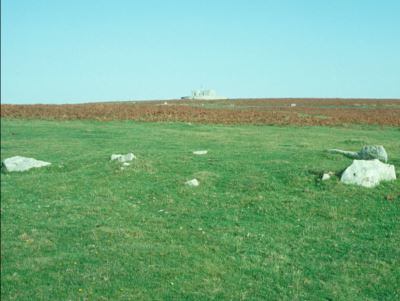 The arrival of metal technology in Britain again saw a significant social shift, away from communal burial and other activities towards a more ranked social system. This is reflected in the adoption of single burial, the laying out of fields and greater evidence of warfare. Certain areas appear to have been used for burial, with characteristic round barrows (earth burial mounds) and cairns (piled stone burial mounds) placed along skylines and in groups. These are common today on uplands, such as Exmoor, but aerial survey has shown in recent years that this is a view biased by survival, lowland barrows having been ploughed flat by millennia of cultivation. On Lundy, there are several barrows known from Middle Park, including on Tibbetts Hill.
Over the northern parts of Lundy, the remains of small, circular, stone houses are visible, and pottery from some at the North End dates them to the Middle Bronze Age (from between the 18th and 11th centuries BC). There is also Late Bronze Age pottery (the early 1st millennium BC) from the North End, Middle Park and Beacon Hill. Some of this pottery appears to have been used for salt production.
The Iron Age
There is almost no evidence for activity in the Iron Age apart from a single sherd of pottery from the North End which probably dates to this period.
The Roman Period
There is again little evidence of Roman-period activity on Lundy. Pottery dating to the 3rd and 4th centuries AD was found in the excavations on Beacon Hill and a single sherd of earlier pottery was recovered from just south of Quarter Wall. The pottery, most of which was made in Dorset or South Devon, compares well with assemblages from North Devon suggesting that Lundy fitted in to the local economy.
Early Medieval
 The period following the loss of Roman control in the early 5th century is one of the most difficult to study for both archaeologists and historians due to the lack of primary data. Lundy is lucky to possess four gravestones from this period, all found in the graveyard on Beacon Hill. Three of these have single names suggesting that they belonged to Christian monks or nuns who had renounced their earthly families. Excavations in the cemetery recorded numerous stone-lined graves clustering around a burial in a stone setting. This reinforces the suggestion of a monastic community with the dead hoping to gain from close proximity to the founding 'saint'. Charles Thomas suggested that this founder was Brychan, ruler of the early kingdom of Brecon in south Wales, whose grave is recorded being on an unnamed island. Thomas suggested that Brychan abdicated to pursue a religious life on Lundy and died there. No bones survived the acidic soils but the founder's grave appeared to have been disturbed, probably to translate the relics to a monastery on the mainland, perhaps at Hartland.
Later Medieval
Settlement in the medieval period seems to have been concentrated on the northern part of the current village where large quantities of pottery have been excavated from Bulls Paradise and Pigs Paradise fields. Some of this was associated with ruined walls and human burials suggesting a complex sequence of activity in the area. A legal agreement of 1204 provides the earliest description of Lundy and indicates that there were two other farms on the island together with areas of common grazing. One of these farms is probably Widows Tenement where the ruins of a medieval farmhouse survive surrounded by small fields.
In 1242 it is recorded that king Henry III had to recover Lundy from William de Marisco who had fled there after being accused of murder and treason. The king then ordered a tower to be constructed to control the island and prevent its use by rebels in the future. The location of this tower is not known but it is assumed to have formed the origins of the current castle at the South End. The remains in Bulls Paradise were assumed by the excavator to have been the stronghold used by de Marisco but the dating of the site is not as certain as was believed in the 1960s.
Post-medieval
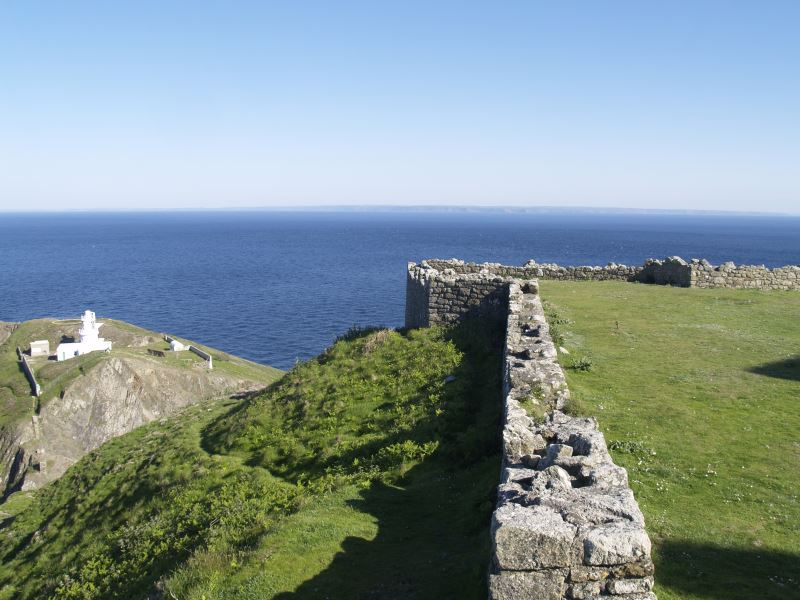 Most of the castle at the South End appears to date to the Civil War when the island was held for the king by Thomas Bushell who owned mines in west Wales and supplied Charles with coinage. He may have dug the so-called Benson's Cave below the castle in an attempt to find silver on Lundy. The curtain wall of the castle shows the distinctive 17th century bastions of the period and Bushell claimed that he had built all of it, though as he was trying to claim compensation he may have exaggerated.
There are numerous remains from later periods, particularly the 19th century, when the Old Light and the fog battery were constructed. There are extensive remains of the granite quarries on the east side and numerous other pits that were dug to test the stone quality in other areas.
Text by Chris Webster
A wide range of invertebrates can be found on Lundy. Over the years around 1500 species have been recorded in Annual Reports by casual and specialist surveyors. Many Groups are represented, Spiders, Woodlice, Myriapods, Damselflies and Dragonflies, Grasshoppers and Crickets, True Bugs, Beetles, Flies, and Bees Wasps and Ants.
An exhaustive list is not attempted here but the more common and visible species are described and, where possible, illustrated. Click on any image to view a larger version.
Each Class has a link to the definitive list of species recorded on Lundy, where their status is described using the DAFOR scale:
- Dominant 50-100%
- Abundant 30-50%
- Frequent 15-30%
- Occasional 5-15%
- Rare < 5%
We have used this scale to indicate what percentage of years the species has been recorded on Lundy. Please treat these assesments with caution as much depends on there being a specialist present on Lundy when the species is liable to been seen and on whether this results in a record being entered in the LFS log book. Most species are severely under-recorded and all records are welcome.
Molluscs
While slugs are abundant in damp weather, which is not uncommon on Lundy, they are very under recorded. Similarly, whilst the large Garden and Brown-lipped Snails can be easily found records are rarely seen in the log book. The remaining snails are quite small and can only usually be found by diligent stone turning or wall inspection. The Lundy list of Terrestrial molluscs can be viewed here.
Spiders (Arachnida)
Two spiders are, if not common, easily found. The Cave Spider can be searched for in Benson’s Cave or the Cave along the Landing Beach.
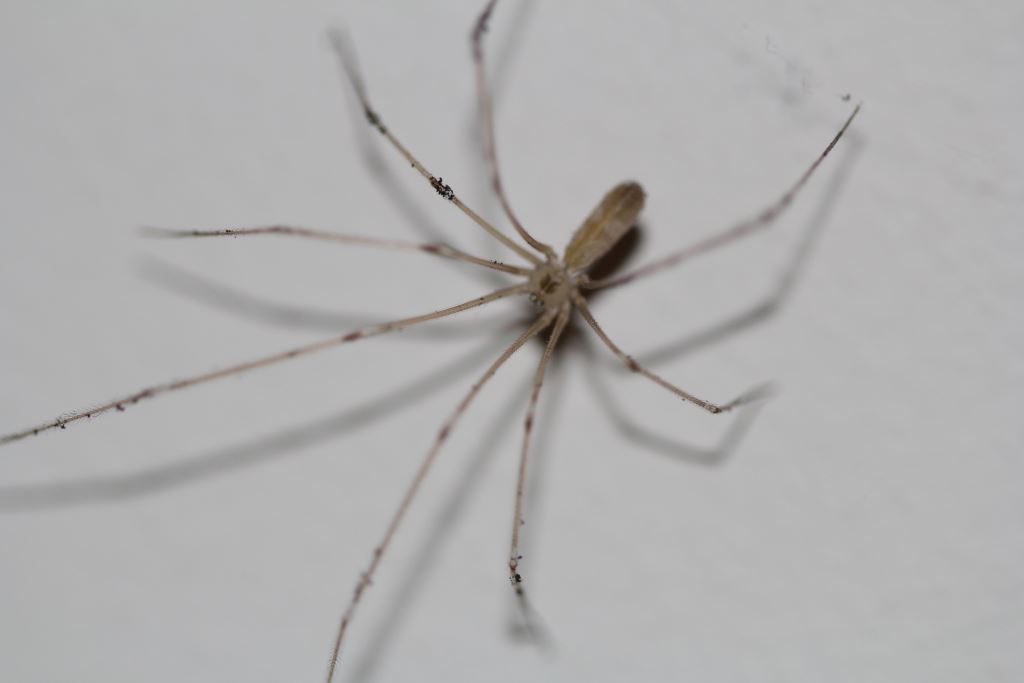
The Cellar Spider is easily confused with Daddy Long-legs. As a spider it has 8 not 6 long spindly legs. It can be found in the upper corners of most properties and should be cherished as it not only eats flies, but also other spiders.
View the Lundy list of Spiders, Harvestmen and Mites here.
Woodlice (Isopoda)
The Common Shiny Woodlouse Oniscus asellus is found all over the island, but a rather more interesting yet easily found species is the Ant Woodlouse Playarthus hoffmannseggi. Whilst looking for ants under stones, you might chance upon this tiny white wood louse. Don’t be fooled into thinking this is a juvenile, it is fully grown at 4 mm and pure white. View the lundy list of Woodlice here.
Myriapods - Millipedes, Centipedes (Diplopoda and Chilopoda)

 There is one centipede that can usually be seen indoors and under stones, but it is very fast moving. The Banded Centipede Lithobius variegatus is extremely common and quite large. Its distinctive banded purple legs easily identify it.
The Pill Millipede Glomeris marginata (not to be confused with the Pill Woodlouse Armadillidium vulgare – check the number of legs) is very common on the Lower East Side Path to the north of Halfway Wall. It has 2 pairs of legs per segment, rolls into a almost perfect sphere and, on Lundy, shows yellow edges to each segment.
The Lundy list of Centipeded and Millipedes can be viewed here.
Dragonflies and Damselflies (Odonata)
Out of 57 UK species, 14 have been reported from Lundy (see article in 2015 Annual Report and the Lundy list here). Of these there are four that can reliably be seen. Blue-tailed Ischnura elegans and Common Blue Enallagma cyathigerum Damselfies, Migrant Hawker Aeshna mixta and Common Darter Sympetrum striolatum are all reported annually and can be seen around the many freshwater bodies and well away from them too. The two “blues” can be distinguished by the colour of their abdomen. The Blue-tailed has a blue tail – i.e. black abdomen with segment 8 blue, whereas the abdomen of the Common Blue is alternately black and blue.


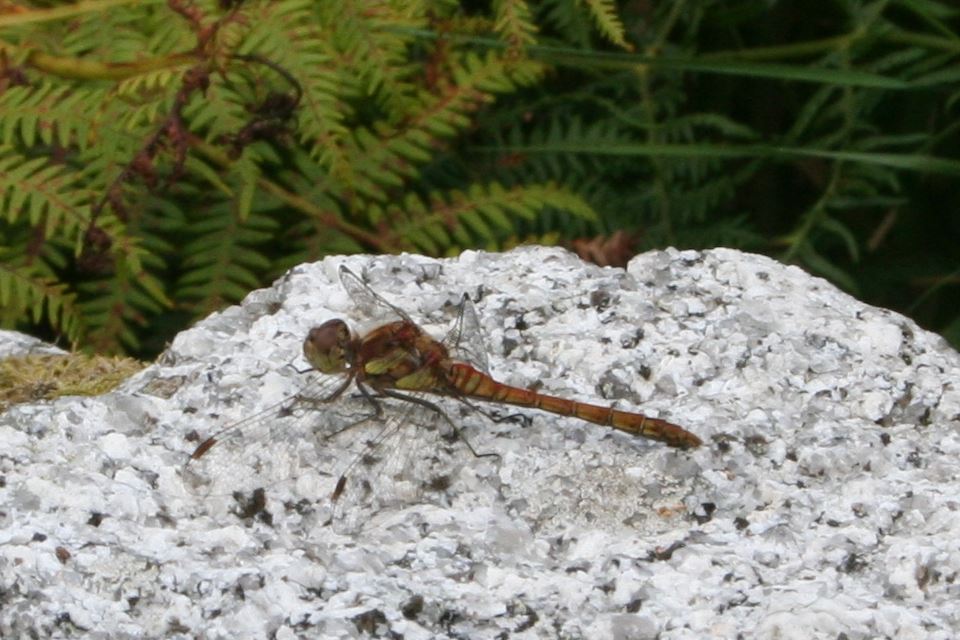
The Migrant Hawker is a medium sized dragonfly predominantly blue but the identifying feature is the yellow triangle where thorax and abdomen meet.
The Common Darter is a small restless dragonfly with a orange-red or brown abdomen is not uncommon and can be seen most years
A fifth species, Four-spotted Chaser Libellula quadrimaculata is rarely seen, but in 1963 there was a mass eruption with thousands appearing all over the island.

Grasshoppers and Crickets (Orthoptera)
One of each species is common on the island. The Common Field Grasshopper Chorlhippus brunneus is reported in most years but comes in a range of colours including a rich brown, purple and pink. Increasingly the Speckled Bush Cricket Leptophyes punctatissima can also be found.
Any newly discovered species will be added to the list here.

True Bugs (Hemiptera)
Shield Bugs are increasingly being seen and reported with the most common being the Gorse Shieldbug Piezodorus lituratus. These are easily identified with their bright yellow underside and habit of sunbathing amongst the gorse bushes that line the top of Millcombe Valley. The full Lundy list can be viewed here.
Beetles (Coleoptera)
Since the eradication of rats in 2006, the most common beetles that can be seen are the dung beetles. Two species can easily be found on the sheltered eastern sidelands particularly the Dor Beetle Anoplotrupes stercorosus. Slow and black it reveals a starting violet underside when turned over. The closely-related Minotaur Typhaeus typhoeus is easily distinguished by its three horns projecting from its head.
Another easily identifiable beetle is the Devil’s Coach-horse Ocypus olens. This is another large black beetle which will identify itself by its habit, when feeling threatened, of raising its abdomen and curling it forwards over its head.


Cockchafers do not feature on Lundy but their relative, the big glossy green Rosechafer Cetonia aurata flies in day-light and often into people.
The Green Tiger Beetle Cicindela campestris is a large predatory beetle common on open ground on the Lower East Side Path and very fast moving. It is easily recognised being bright green with white spots.
Three further beetles may be found. The large bronze Carabid beetle Carabus granulatus generally found amongst rank grass on the plateau; the unmistakeable Imperial Rove Beetle Staphylinus caesareus easily identified by the two rows of 3 yellow spots on its abdomen and the Black Snail Beetle Silpha atrata is reported every year and is distinguished by its black ridged carapace and the pronotum (between head and wing cases) which is very big, about one third the size of the beetle.


Moth traps often collect various species of Sexton Beetles Nicrophorus sp. easily identified by their black and orange markings as well as the strong and unpleasant smell they give off.
Finally, diligent searchers with keen eyes should examine Lundy Cabbage for its diminutive (2.8–3.6mm) Bronze Lundy Cabbage Flea Beetle Psylliodes luridipennis.
Another familiar family of beetles is the ladybirds. Their occurrence is very variable being abundant occasionally and scarce frequently. The 7-, 10- and 22-spot Ladybirds have been reported but the tiny (2-4mm) orange-red 24-spot Ladybird Subcoccinella vigintiquatuorpunctata can reliably found by diligently searching, on hands and knees, clumps of Sea Campion.
The complete Lundy beetle list can be viewed here.
Flies (Diptera)
Flies in general are poorly recorded, though craneflies and hoverflies are reported regularly.
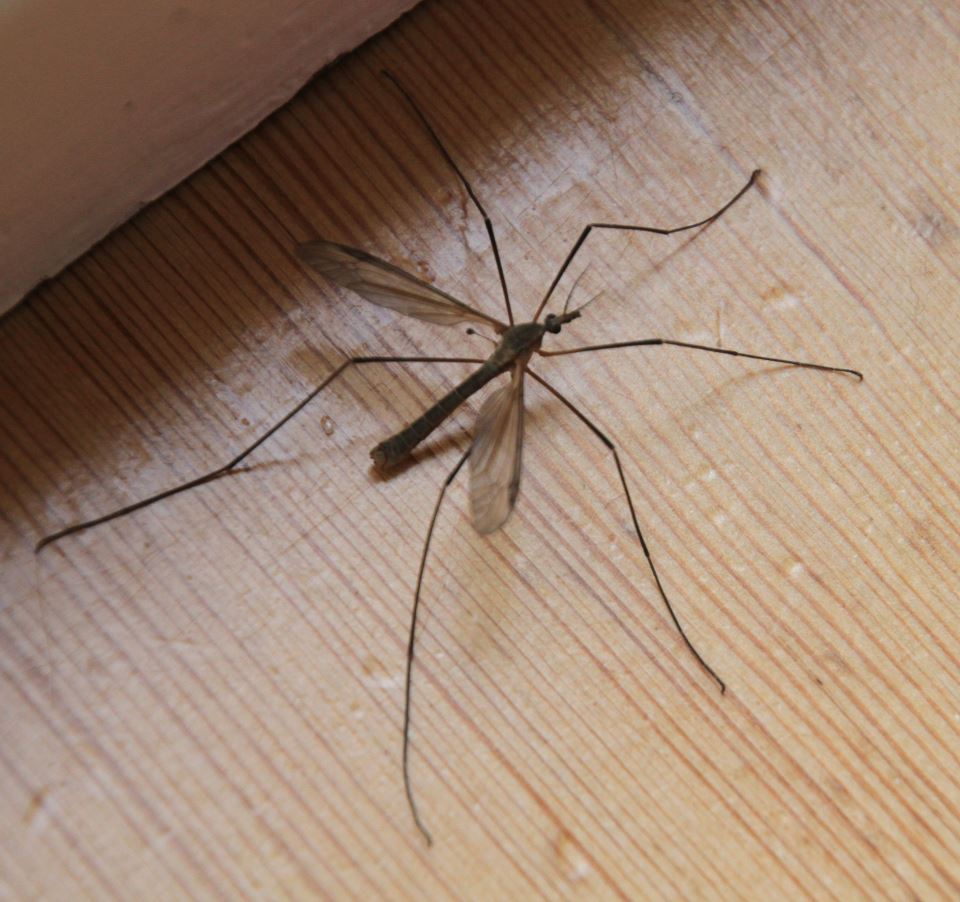

The most common is the Common European Cranefly or Daddy Longlegs Tipula paludosa. In fact during Discover Lundy 2016 there was a mass emergence of this large cranefly when thousands of them appeared in moth traps, properties and all over the plateau.
Hoverflies are mimics and could be confused with bees or wasps but significantly, as Diptera, they have only two wings. The Marmalade Hoverfly Episyrphus balteatus, Bumblebee Hoverfly Volucella bombylans and the Pied Hoverfly Scaeva pyrastri all occur on the island.
The complete list of species recorded on Lundy can be viewed here.
Bees, Wasps and Ants (Hymenoptera)

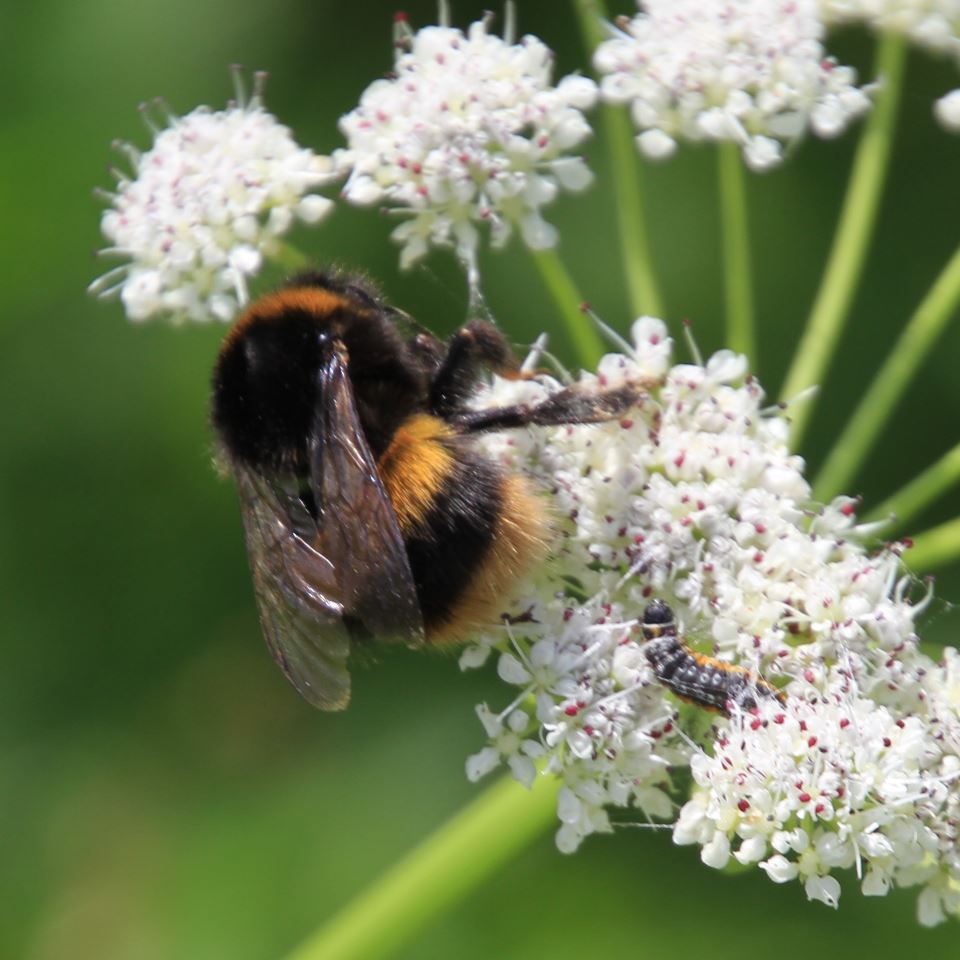 Two bees are regularly seen and reported – the White-tailed Bumblebee Bombus leucorum and the Buff-tailed Bumblebee Bombus terrestris. The species are easily separated by the distinctive colour of the dorsal tip of the abdomen.
Common Black Ants Lasius niger can be found nesting under stones and will often reveal their companion species the Ant Woodlouse Platyarthrus hoffmannseggii.
The complete Lundy list of Hymenoptera may be viewed here.
Other groups
View the Lundy lists of Earwigs and Bristletails.
Text by Alan Rowland
There are no articles in this category. If subcategories display on this page, they may have articles.

External links
Downloads
Latest news
Diana Keast

It is with huge sadness that we share news of the death of our President, Diana Keast, who passed away peacefully last night.
Diana was the last surviving private owner of Lundy. Her father, Martin Coles Harman, purchased Lundy in 1925 and following his death Martin's surviving children inherited Lundy. It was Diana, with her sister Ruth and sister-in-law Kay, who sold Lundy to the National Trust in 1969.
Online 2021 AGM
Our 2021 AGM will take place online on Saturday 4th September from 3.30pm prompt using Zoom. We look forward to seeing you for a short business meeting followed by the Warden's Report, presented by Dean Jones, and the Lundy General Manager's Report, presented by Derek Green.
Lundy featured on BBC Travel website
An item entitled Lundy:The tiny isle with a wild, lawless past was posted today on the BBC Hidden Britain website. You an read the article here.